top of page

All Posts
Mindset and Mindfulness:
Mindset and mindfulness are the twin engines of progress. Mindset sets the direction—constant, not perfectly linear, progress matters more than flawless execution, and setbacks are part of the journey. If growth stalls, it’s time to reassess goals or methods. Mindfulness, on the other hand, is what accelerates that progress. Being fully present with your body creates focus, calm, and true integration of practice—making skills feel like a natural part of you rather than just s
Mar 241 min read
Aches and Injuries:
Pain and injuries are often misunderstood. In short, they usually come down to one of two things: either the body was asked to do something it wasn’t ready for, or the guidance was missing or inadequate. The good news is that the body is built to heal itself—it just needs the right conditions and time. Quick fixes like anti-inflammatories might mask the problem temporarily, but they don’t address the root cause and can make matters worse, turning what could be weeks of recove
Mar 241 min read
Rest time anyone?
Pushing your body to the limit can be beneficial under proper professional guidance, but rest is just as essential—and well-documented. It lets the body recover and grow. A full break from a skill or practice gives the brain time to process and absorb all the information it’s been handling. Once you resume practice, everything your brain and body have processed is fully integrated into your system. It’s almost as if the body has made it its own—no conscious effort is needed,
Mar 241 min read
What is the fastest way to progress? The slow way is the fast way.
Let’s keep this one to the point: Consistency is everything—both in practice time and frequency—paired with a clear, focused plan. It doesn’t have to be complicated: pick one skill and a few drills that support it. With the right foundations, this approach maximizes progress, delivering the most goals in the shortest time while maintaining high-quality training and results. If the training load is around the 3/week, an extra complementary skill can be introduced.
Mar 241 min read
How often should I train? The more the better! Not necessarily…
When it comes to hand balancing—or really any skill—more isn’t always better. The key is clarity: know what you want to get out of your practice. Even once a week can bring progress if guided properly, though it will be slow. For consistent, steady improvement without overloading your body, two to three sessions per week hits the sweet spot even though requiring some extra preparation. More frequent training requires a structured program and careful attention to your body, in
Mar 241 min read
What is Hand-balancing to me?
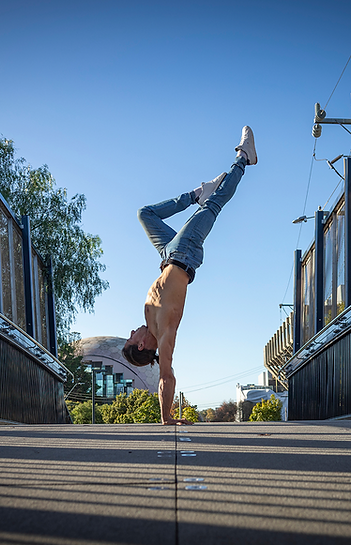
Hand balancing is far more than a flashy party trick. Sure, it grabs attention and gives an ego boost, but its true value lies in how it anchors me to the present. The practice of hand balancing teaches you to achieve complete focus—every muscle, every shift, every tiny movement becomes instantly apparent. All systems are all, all body parts are squeezed all senses are switched on. As someone whose mind tends to drift constantly, this demand for attention has taught me how to
Mar 241 min read
The Hand Balancing training benefit:
The benefits of hand balancing practice are numerous and play a role on a physical, mental, and spiritual level. This practice engages the muscles of the entire body, particularly the arms, strengthening the trunk, abdominal muscles, mid-back and shoulder girdle (shoulders, biceps, triceps and wrists). In addition to reducing stress and depression , handstands boost confidence and self-esteem. On a mental level, the practice increases our ability to concentrate by refocusi
Mar 241 min read


bottom of page